2026 Top Trends in Pu Stone Products and Their Applications?
As we approach 2026, the landscape of Pu Stone products is rapidly evolving. Recent reports indicate that the global market for PU stone is projected to reach $1.2 billion by 2026, driven by innovations in design and sustainability. Experts forecast that environmentally friendly applications will dominate, with many companies prioritizing eco-conscious materials.
Dr. Emily Carter, a leading expert in the Pu Stone industry, asserts, “The future of PU stone lies in its adaptability and sustainability.” This statement reflects the increasing demand for versatile products across various sectors, including construction and interior design. New trends are emerging, emphasizing lighter, more durable materials that meet consumer needs while adhering to green standards.
Moreover, there are challenges to consider in the Pu Stone sector. Supply chain issues and the need for higher-quality raw materials can impact production and innovation. As companies work toward meeting these demands, they must also reflect on their processes and ensure they operate ethically. Balancing innovation with responsibility will be crucial in shaping the future of Pu Stone products and their applications.

Emerging Innovations in Pu Stone Material Technology for 2026
The year 2026 promises significant developments in PU stone material technology. Innovations are aiming to enhance the durability and sustainability of these products. New formulations are being introduced that reduce environmental impact while maintaining high performance. This shift reflects a growing awareness of eco-friendly practices within the industry.
Emerging technologies focus on improving the aesthetic aspects of PU stone. Recent advancements enable manufacturers to create textures and colors that mimic natural stones. Such features can significantly appeal to architects and designers. Yet, challenges remain in achieving uniformity in texture across large scale productions. This inconsistency can affect overall product perception.
Another area of development involves the integration of smart materials. These materials can respond to external stimuli, offering additional functionality. However, incorporating them can complicate the production process. The cost-effectiveness of such innovations is another aspect requiring careful analysis. It's crucial to balance cutting-edge designs with practical applications for widespread use.
2026 Top Trends in Pu Stone Products and Their Applications
| Trend |
Application Area |
Innovations |
Potential Impact |
| Sustainable Sourcing |
Construction |
Biodegradable composites |
Reduced carbon footprint |
| Enhanced Durability |
Outdoor Products |
Weather-resistant coatings |
Longer lifespan of products |
| Smart Materials |
Interior Design |
Self-healing properties |
Lower maintenance costs |
| Color Customization |
Consumer Goods |
Advanced pigment technology |
Greater consumer satisfaction |
| 3D Printing Integration |
Architecture |
Customized structural components |
Reduced waste in manufacturing |
Sustainable Practices in the Production of Pu Stone Products
The production of PU stone products has increasingly embraced sustainable practices. Many manufacturers are exploring eco-friendly materials to reduce their environmental impact. This shift involves sourcing raw materials from renewable resources. It also incorporates innovative recycling processes, minimizing waste and energy consumption.
Adopting sustainable practices is not without challenges. Balancing cost-effectiveness with eco-conscious choices can be difficult. Some companies struggle to maintain product quality while using alternative materials. Nonetheless, increasing consumer awareness is driving demand for greener options. Designers pay attention to durability and aesthetics as well, ensuring that products remain appealing.
As the industry evolves, transparency becomes crucial. Consumers need to know the origins and processes behind the products they purchase. Improved labeling standards can help facilitate this understanding. Future trends may require an even greater commitment to sustainability, pushing manufacturers to rethink their production strategies.
Diverse Applications of Pu Stone in Residential and Commercial Design
The versatility of PU stone is revolutionizing both residential and commercial design. Its lightweight nature makes it an excellent choice for various applications. According to a recent market analysis, the demand for PU stone products is projected to grow by 12% annually through 2026. This growth reflects a shift toward materials that combine aesthetic appeal with functionality.
In residential spaces, PU stone can be used for countertops, flooring, and decorative elements. It mimics natural stone while offering affordability and ease of installation. The vibrant textures and finishes available can enhance any interior, making it a favored choice for modern homeowners. One study noted that 45% of architects recommend PU stone due to its design flexibility and durability.
Commercial applications are equally diverse. PU stone finds its place in retail environments, office spaces, and restaurants. Its ability to withstand heavy foot traffic without sacrificing style makes it invaluable. Yet, some professionals point out that while PU stone is resilient, it may require careful maintenance to preserve its appearance over time. The balance between beauty and practicality is crucial in both residential and commercial design.
Market Trends Influencing the Demand for Pu Stone Products in 2026
The demand for PU stone products is expected to see significant growth in 2026. According to recent market analysis, this segment of the construction materials industry is projected to expand at a CAGR of 7.4%. This growth is largely driven by the rising popularity of environmentally friendly materials. More consumers now prioritize sustainable options in their purchasing decisions.
Additionally, advancements in manufacturing technology are enhancing product quality and versatility. Many manufacturers are innovating in areas such as texture and durability. This innovation enables PU stone products to cater to various applications, including residential and commercial spaces. However, not all manufacturers adhere to sustainability standards. This inconsistency raises questions about the long-term environmental impact of some products.
Market segmentation also reveals interesting trends. The residential sector accounts for a significant portion of demand, driven by renovations and new constructions. Roughly 40% of consumers prefer PU stone for outdoor spaces due to its weather resistance. There remains a need for reliable information on the long-term performance and maintenance of these materials. Consumers may find it challenging to navigate their options effectively. The evolving landscape indicates that while demand is rising, there is still room for improvement in transparency and education within the industry.
Comparative Analysis of Pu Stone Versus Traditional Building Materials
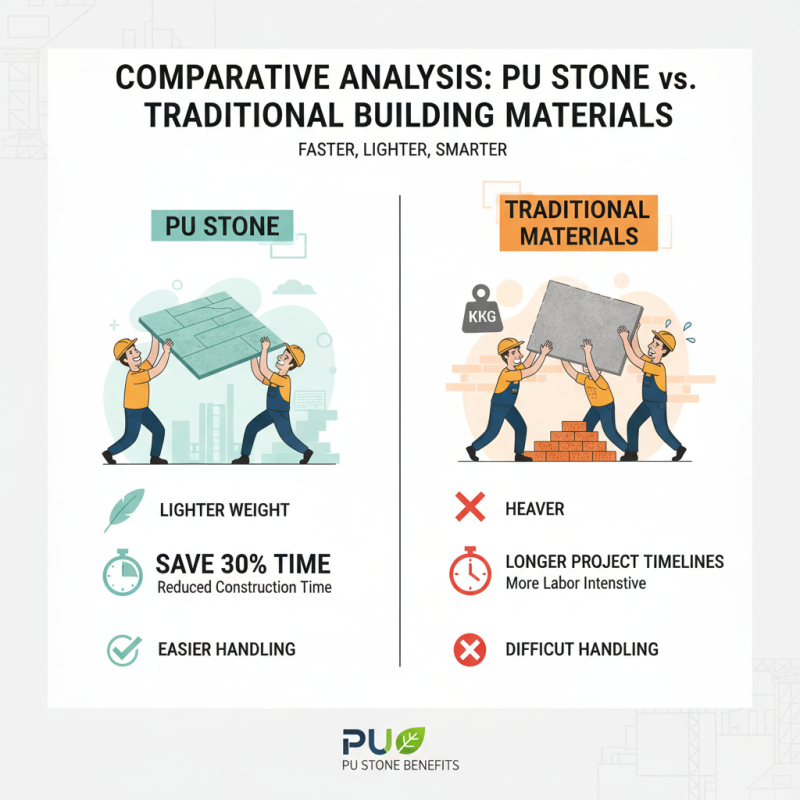
The comparative analysis of PU stone versus traditional building materials reveals significant benefits. PU stone is lighter than concrete, which makes it easier to handle. Estimates suggest that PU stone can reduce construction time by up to 30%. Traditional materials, like concrete and brick, tend to be heavier and require more labor, leading to longer project timelines.
One of the standout features of PU stone is its durability. Research indicates that PU stone can withstand extreme weather and resist cracking better than many conventional materials. This durability translates to lower maintenance costs over time. A recent industry report showed that buildings using PU stone had 20% fewer repair claims than those constructed with traditional materials. However, a perceived drawback lies in the initial costs of PU stone applications, which can be higher depending on the design and finishing.
Energy efficiency is another crucial area where PU stone shines. It offers superior insulation properties compared to conventional materials. This leads to reduced heating and cooling costs, which are essential for long-term sustainability. However, the long-term environmental impacts of manufacturing PU stone still warrant more research. Balancing these factors is vital for architects and builders considering material selections in future projects.