Top Carbon Fiber Panel Manufacturers for Global Buyers
Carbon Fiber Panel sourcing can shape a product’s weight, stiffness, appearance, and service life. For global buyers, the right manufacturer is not simply the one with the lowest quoted price. Material grade, fiber orientation, resin system, panel thickness, and finish all affect performance. A sample under workshop lighting may look different from a production batch. Small details matter.
This guide introduces manufacturers serving varied industries and explains what buyers should compare. Look for clear product specifications, documented quality checks, responsive engineering support, and realistic production timelines. Ask how panels are cut, finished, packed, and inspected before shipment. Request samples when possible. Check whether the supplier can meet your dimensions and tolerances, rather than relying on broad catalog claims. Experience with export packaging can also help prevent scratched surfaces or damaged corners in transit.
Still, no shortlist can replace careful evaluation. A company’s website may be polished, while important process details remain unclear. That is worth questioning. Buyers should confirm claims directly and review current documents before making a commitment. The best fit depends on the application, order volume, and required finish. Some projects need exceptional cosmetic consistency; others prioritize strength and predictable lead times. This overview offers a practical starting point, not a guarantee. Compare suppliers against your own requirements, and allow room for testing before scaling an order.
Understanding Carbon Fiber Panels and Their Industrial Uses
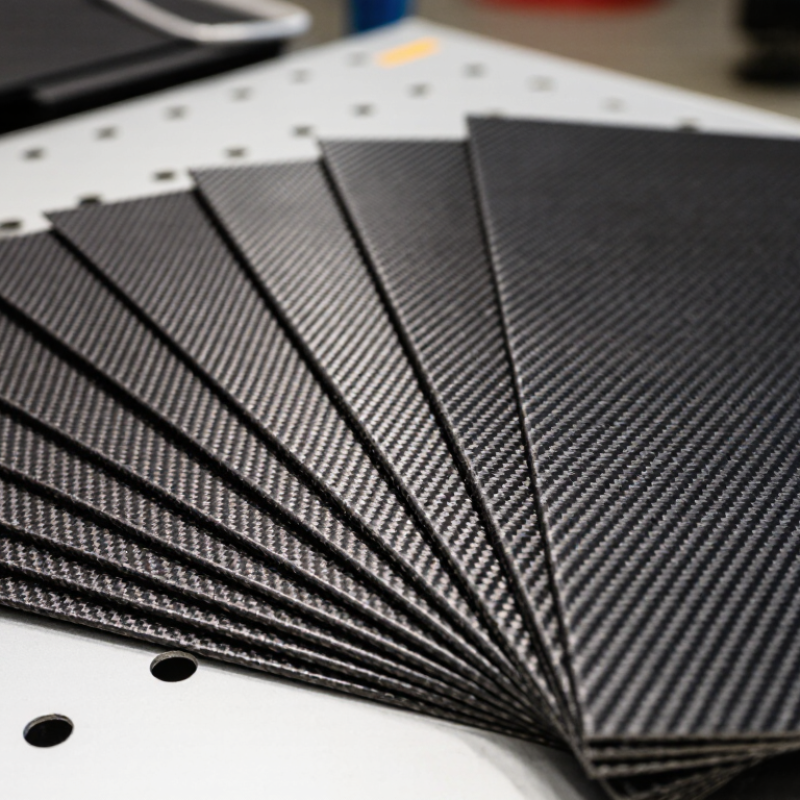
Carbon fiber panels pair strong, stiff fibers with a polymer resin matrix. Their performance depends on fiber direction, layer arrangement, resin type, and panel thickness. A thin panel can resist bending along its main fiber direction but remain less stiff across it. Details matter.
In industrial settings, these panels appear in machine covers, inspection hatches, robotic arms, vehicle interiors, and lightweight equipment enclosures. Their low mass can help reduce moving loads, while their stiffness supports stable components. A workshop team might replace a heavy metal access panel and notice easier handling during maintenance. The result still depends on the design.
Selection calls for more than comparing weight. Buyers should check load ratings, temperature limits, chemical exposure, mounting points, and surface finish. Drilled edges need care; poorly supported holes may crack under repeated vibration. Impact damage can also hide beneath the surface. It is easy to overestimate what a glossy panel can withstand. Review technical data and test a representative part under actual service conditions. Carbon fiber can also conduct electricity, so electrical isolation may be necessary near sensitive equipment.
Key Factors for Evaluating Carbon Fiber Panel Manufacturers
Choosing a carbon fiber panel manufacturer starts with the part’s service conditions, not a glossy catalog. Define load direction, thickness, operating temperature, moisture exposure, and finish requirements before comparing quotes. Ask how fiber orientation and resin content are controlled. Check whether the supplier can hold thickness and flatness tolerances across repeat batches. Inspect a cut edge for clean layers, resin-rich spots, or visible voids. Small details matter. A polished sample can reassure, but it cannot prove consistency across a full production run.
Request dated test reports linked to the exact panel grade and production lot. Confirm which methods measured tensile or flexural performance, and whether tests used finished panels or raw laminate. Ask for traceability records, inspection criteria, and a clear process for handling nonconforming parts. Compare sample panels with early production pieces using your own dimensional checks, where practical. Precise answers about lead times, tooling limits, and corrective actions are more useful than broad promises. Checklists have blind spots, so keep incoming inspection proportional to the component’s risk.
Leading Manufacturers and Their Product Specialties
Carbon fiber panel manufacturers often focus on distinct production strengths. Some make flat, decorative laminates for equipment housings and interior fittings. Others produce structural sandwich panels with lightweight cores for vehicles, marine applications, or industrial enclosures. Custom shops may specialize in cut-to-size sheets, drilled patterns, and bonded inserts. Details matter.
For buyers, compare more than surface appearance. Ask about fiber orientation, resin type, panel thickness, flatness tolerance, and protective coatings. A glossy sample can look excellent while revealing little about the finished panel’s consistency. Not always. Request a current technical data sheet and a sample cut from the intended production process. Check the edges for fraying, voids, or uneven bonding. Manufacturers with documented inspection procedures and traceable material records can make evaluation easier, but verify what those documents actually cover. A certificate alone does not guarantee a panel suits your design. Specify operating temperature, moisture exposure, and expected loading before comparing quotations. Small gaps in the brief can become costly surprises.
Carbon-Fiber Panel Buying Benchmarks: Typical Material Density
Representative density values help buyers compare carbon-fiber panels with common metal alternatives. Lower density can reduce component weight, while the best panel choice also depends on stiffness, strength, layup, and core construction.
Representative values in g/cm³. Carbon-fiber laminate density varies with the fiber, resin, and layup; metal density varies by alloy. These are material benchmarks, not manufacturer-specific product specifications.
Comparing Manufacturers by Quality, Capacity, and Global Reach
Comparing carbon fiber panel manufacturers requires more than reviewing polished sample photos. Quality should be supported by clear material specifications, repeatable production checks, and inspection records. Ask how the supplier controls panel thickness, surface finish, and fiber alignment across different production batches. A smooth sample is useful, but it cannot prove consistent output. Small details matter. Inspect cut edges and mounting points, where uneven finishing can become visible during installation.
Capacity is not just a large factory floor. Request realistic monthly output, typical lead times, and details about how urgent orders affect existing schedules. A manufacturer may have impressive equipment yet limited capacity for custom dimensions. Global reach also depends on practical support: protective packaging, export documentation, shipping options, and responsive communication across time zones. Check whether technical drawings and inspection results are available in a language your team can use. Distance adds friction. No comparison scorecard captures every production issue, and buyers can overlook that. Before committing, compare a representative sample with your own measurements and assembly requirements.
How Global Buyers Can Assess Suppliers and Manage Procurement
Global buyers should assess carbon fiber panel suppliers through evidence, not polished brochures. The International Energy Agency’s Global EV Outlook 2024 reported nearly 14 million electric cars sold in 2023, around 18% of global car sales. The Global Wind Energy Council recorded 117 GW of new wind capacity that year. These figures signal demand across lightweighting sectors, but they do not prove a supplier can meet your specification. Numbers can mislead.
Request traceable records for fiber grade, resin system, panel thickness, flatness, and batch testing. Compare samples against the drawing, then check whether production parts match them. Ask how the supplier controls curing, storage, and defect reporting. For aerospace or other tightly controlled applications, confirm that its quality system matches your sector’s requirements. A tidy datasheet is not the same as a stable process; a small pilot order can reveal gaps that a remote audit misses.
Tips: Put acceptance criteria in the purchase order. Request a certificate of analysis for each lot, plus inspection records for critical dimensions. Agree on packaging and moisture protection before shipment. Keep a retained sample when practical. Ask for evidence, not assurances.