What Are the 10 Best 3D Wall Panel Buying Tips?
Choosing a 3d Wall Panel can transform a plain room, but attractive patterns do not guarantee a suitable product. A panel may look impressive online and feel disappointing under real lighting. This guide explores ten practical buying tips for homeowners, designers, and contractors who want a confident decision.
Begin with the room’s purpose, wall condition, and daily demands. A bedroom may need soft textures, while a busy hallway requires stronger impact resistance. Check panel dimensions carefully. A few millimeters can affect the final layout. Request a physical sample whenever possible. Touch the surface, inspect the edges, and place it near your actual lighting.
Material quality matters. Compare PVC, MDF, gypsum, bamboo fiber, and other available options. Review moisture resistance before installing panels in kitchens or bathrooms. Fire-performance documentation should come from a reliable manufacturer or recognized testing body. Do not accept vague claims. Ask about installation methods, compatible adhesives, cleaning requirements, and replacement availability.
Acoustic performance is often misunderstood. Decorative texture alone does not make a room soundproof. Look for tested absorption data if noise control matters. Sustainability claims also deserve evidence, including recycled content, formaldehyde information, and responsible packaging. Calculate coverage, cutting waste, trims, delivery costs, and labor before comparing prices.
Small details matter.
A low price may hide expensive installation problems. I have seen buyers focus on color and overlook uneven walls, then blame the panels later. That mistake is easy to avoid. Consider warranties, return terms, supplier experience, and customer reviews with project photos. The best choice is not always the boldest design. It is the panel that performs reliably in your actual space.
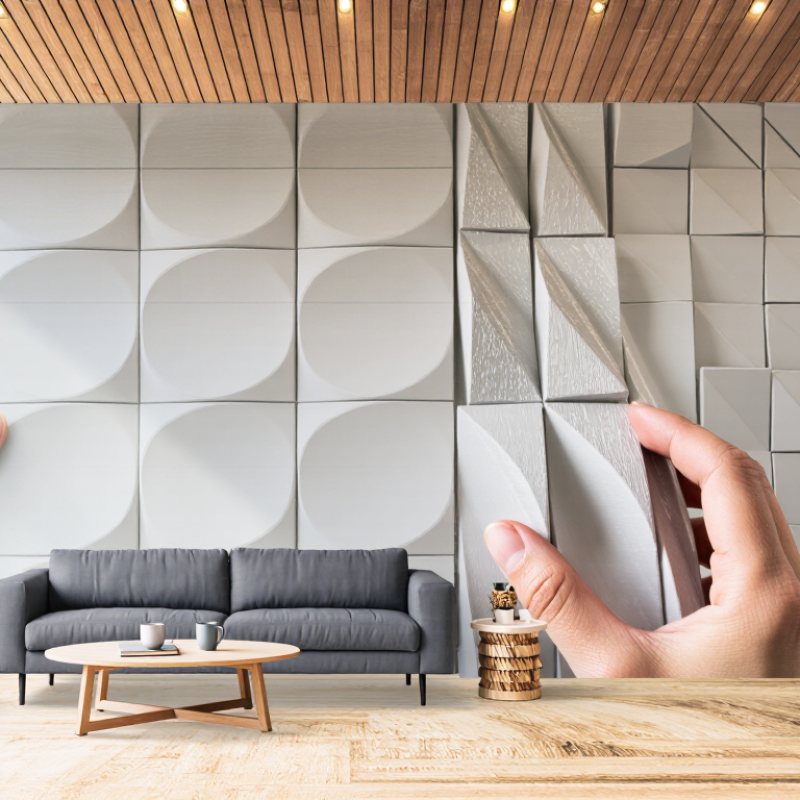
Identify Your Wall Panel Needs, Style, and Room Requirements
Choosing the right 3D wall panel begins with the room, not the pattern. Measure each wall, including doors, windows, outlets, and skirting boards. A simple sketch can prevent expensive cutting mistakes. Decide whether you need sound absorption, impact resistance, moisture tolerance, or mainly visual texture. A bedroom may benefit from soft, low-relief panels, while a busy hallway needs a tougher surface.
Look closely at the room’s light. Deep geometric panels create stronger shadows near windows and ceiling lamps. In a dim room, pale colors and shallow profiles usually feel less crowded. Match the panel scale to the space. Large patterns can overwhelm a narrow wall. Small patterns may disappear in a spacious living area. Think about cleaning, too. Dust settles quickly in sharp grooves.
Material selection requires care. Check the panel’s moisture, heat, and fire-performance information before installation. Wet areas need products specifically rated for those conditions, not simply panels advertised as water-resistant. Confirm whether the wall is flat, dry, and structurally sound. Adhesive alone may not suit every surface. Follow the installation instructions and local building requirements.
I once underestimated how much a raised pattern changed a room’s acoustics. The wall looked excellent, but the space felt less balanced with hard flooring and glass nearby. That experience changed my planning process. Request a sample, view it in morning and evening light, and test cleaning on a hidden area. Small checks matter.
Compare Panel Materials, Textures, Durability, and Maintenance Needs
Choosing the best 3D wall panel starts with material, not appearance. A 2024 Grand View Research analysis estimated the global decorative wall panel market at about US$11.7 billion in 2023. It also forecast a 6.4% annual growth rate through 2030. That growth reflects stronger demand for textured interiors, but quality varies widely.
PVC panels resist splashes and clean easily with a soft cloth. They suit kitchens, hallways, and busy family rooms. MDF creates sharper patterns, yet moisture can swell unsealed edges. Mineral fiber offers better sound absorption, while wood veneer gives warmer visual depth. Check the panel’s thickness, backing, edge finish, and fire-test documentation. ASTM E84 results can help compare flame-spread and smoke-developed performance. Texture matters too. Deep grooves collect dust. Glossy surfaces reveal fingerprints. Matte finishes hide small flaws better.
Tips: Order physical samples before buying. View them beside your actual lighting. Rub the surface gently with a damp cloth. Ask for cleaning limits, repair options, and replacement availability. EPA guidance identifies indoor pollutants as a concern, so choose low-emitting adhesives and finishes when documented. Installation also deserves attention. Uneven walls can exaggerate shadows across geometric patterns. I have seen attractive samples look disappointing after poor alignment. That mistake is easy to underestimate. A slightly imperfect seam may become highly visible near a window, so inspect the full layout before fixing every panel.
Check Panel Dimensions, Coverage, Compatibility, and Installation Method
Buying 3D wall panels starts with measurements, not texture. Record wall height and width in several places. Corners are rarely perfect. A laser measure improves accuracy, but a steel tape works well. Calculate coverage after allowing for doors, windows, and ten percent waste. That extra material helps match patterns and replace damaged pieces later. Panel dimensions can mislead when edges overlap or require spacing. Ask for the usable face size, not only the package size.
Compatibility deserves equal attention. Compare panel material with your wall surface, room moisture, and temperature changes. A decorative panel suited to a dry bedroom may fail near a steamy shower. Check whether the surface is painted plaster, tile, concrete, or unfinished board. Dust, grease, and loose paint can weaken adhesion. Test one panel in a hidden area for 48 hours. I have seen rushed installations look acceptable at noon, then show gaps by evening. The lesson is simple: installation instructions are evidence, not decoration. Confirm whether panels need adhesive, screws, battens, or a combination. Some methods demand ventilation and protective equipment. Do not assume a heavy panel belongs on every wall. A small sample may expose cutting difficulty, color variation, or an impractical pattern before the full purchase.
Evaluate Fire Safety, Moisture Resistance, and Indoor Air Quality
What Are the 10 Best 3D Wall Panel Buying Tips?
When choosing 3D wall panels, fire safety deserves more than a quick label check. Ask for current, independent test reports that match the panel’s exact material and thickness. A generic certificate may not cover the product you received. Confirm the classification, test method, and installation conditions with local building professionals. Keep clearance from heat sources, even when a panel is marketed as fire resistant. It is a safer habit.
Moisture resistance matters in bathrooms, kitchens, basements, and poorly ventilated rooms. Examine the panel edges, joints, backing, and adhesive system, because water often enters through seams. Look for clear guidance on humidity limits, cleaning, and sealing. I once inspected a decorative sample that looked solid, yet its unprotected back absorbed water quickly. Samples can deceive. Test a cut edge if the supplier permits it, and never install panels over damp walls.
Indoor air quality also depends on more than a pleasant smell. Request emissions information for the panel, adhesive, coating, and backing together. Prefer products tested for low emissions under recognized standards, with documentation you can verify. Ask whether formaldehyde, volatile organic compounds, and plasticizers are measured. Ventilate the room during and after installation, following the manufacturer’s instructions. Low odor is not proof of low emissions. An attractive texture cannot compensate for poor documentation, hidden moisture, or uncertain chemical content.
Compare Prices, Warranties, Reviews, and Supplier Reliability
Buying 3D wall panels requires more than comparing the advertised price. Check the cost per square meter, shipping, corner pieces, adhesive, and installation tools. A low price can become expensive after these additions. Request a physical sample when possible. Online images may hide uneven texture, weak edges, or noticeable color changes.
Read the warranty carefully. Confirm its length, coverage, exclusions, and claim process. Some warranties cover manufacturing defects but exclude moisture damage or incorrect installation. Ask whether replacement panels will match your original batch. Customer reviews can reveal useful details, especially after several months. Look for comments about warping, cleaning, delivery damage, and support responses. Reviews with photographs usually provide stronger evidence than short ratings.
Supplier reliability deserves equal attention. Check whether the supplier provides technical measurements, installation guidance, and a reachable service contact. Ask for product specifications, fire-performance information, moisture limits, and maintenance instructions. A professional supplier should answer clearly rather than pressure you to order quickly. Confirm lead times and inspect the delivery before signing acceptance documents. Keep invoices, photographs, and written promises in one folder.
My own buying mistake was trusting a beautiful sample without checking the back surface. Installation took longer than expected. That detail mattered. Compare at least three quotes using the same panel area and accessories. Calculate waste, usually from cuts around sockets and corners. A dependable supplier may not offer the cheapest quote, but transparent pricing and practical support can prevent costly surprises.
What Are the 10 Best 3D Wall Panel Buying Tips?
Compare prices, warranties, reviews, installation requirements, and supplier reliability before you buy.
How to use this chart
Typical retail price ranges are shown in USD per square foot. Use the lower and upper ends as a first comparison point, then verify panel thickness, coverage, fire rating, moisture resistance, warranty length, return terms, installation costs, review quality, sample availability, and supplier response time.