Inquiry
Form loading...

How to Choose the Right Acoustic Panel in 2026?

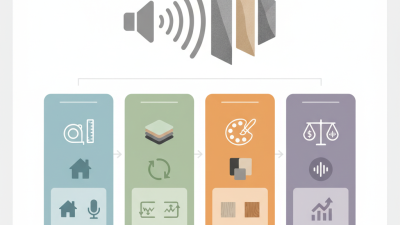
Choosing the right Acoustic Panel in 2026 requires more than comparing colors, prices, or catalog photographs. A panel must respond to the room’s actual problem. Echoes in a glass meeting room need a different solution from speech privacy beside a busy corridor. The U.S. Environmental Protection Agency reports that people spend about 90% of their time indoors, making indoor sound quality a practical health and productivity concern. The World Health Organization’s Environmental Noise Guidelines also connect excessive noise exposure with sleep disturbance, annoyance, and other health risks.

Professional guidance supports a measured approach. The WELL Building Standard emphasizes acoustic comfort through sound isolation, background-noise control, and reverberation management. Recent market analyses from Grand View Research and Fortune Business Insights indicate continuing demand for architectural acoustic products, especially in offices, education spaces, hospitality, and residential interiors. Yet market growth does not guarantee good results. A cheap polyester panel may reduce high-frequency reflections while leaving low-frequency noise almost untouched.

Professor Trevor Cox, an acoustic engineer and author, has often stressed that “acoustics is about the interaction of sound and space.” That principle should guide every selection. Measure reverberation time where possible. Check the panel’s absorption rating, mounting method, thickness, coverage, fire performance, and recycled content. Consider the listener’s position, not only the wall behind the desk. Sometimes, the visually impressive choice performs poorly. That is an uncomfortable possibility, but it matters. This guide examines the evidence, specifications, and practical trade-offs behind a reliable Acoustic Panel decision in 2026.
How to Choose the Right Acoustic Panel in 2026?

Define Your Room’s Acoustic Goals and Main Sound Problems

How to Choose the Right Acoustic Panel in 2026?

Start by defining the room’s acoustic goal, not by choosing a panel color. A podcast room may need clearer speech. A restaurant may need less conversation spill. A bedroom may require quieter nighttime conditions.

The World Health Organization recommends indoor bedroom noise below 30 dB(A) at night.

It also recommends below 35 dB(A) in classrooms for good teaching and learning.

These figures come from the Environmental Noise Guidelines for the European Region (2018).

Listen before measuring.

Clap near the room’s center, then stand beside a hard wall. A long metallic tail suggests excessive reverberation. Muffled speech suggests a different problem. Use ISO 3382 measurement methods when possible, especially for offices, studios, and larger spaces. Record reverberation time, background noise, room dimensions, and the main listening position. Small details matter.

Do not confuse absorption with sound isolation.

Panels reduce reflected energy inside a room. They rarely stop traffic, machinery, or voices passing through walls. ANSI/ASA S12.60 identifies low reverberation as important for classroom speech clarity, with limits near 0.6 seconds in smaller rooms.

In practice, one poorly placed panel can look impressive and change little. I have seen this happen.

Begin with ceiling reflections and the wall behind the speaker, then reassess with another listening test. Perfect coverage is not always necessary. Even the first estimate may be wrong.

Compare Acoustic Panel Types, Materials, and Sound Absorption Ratings

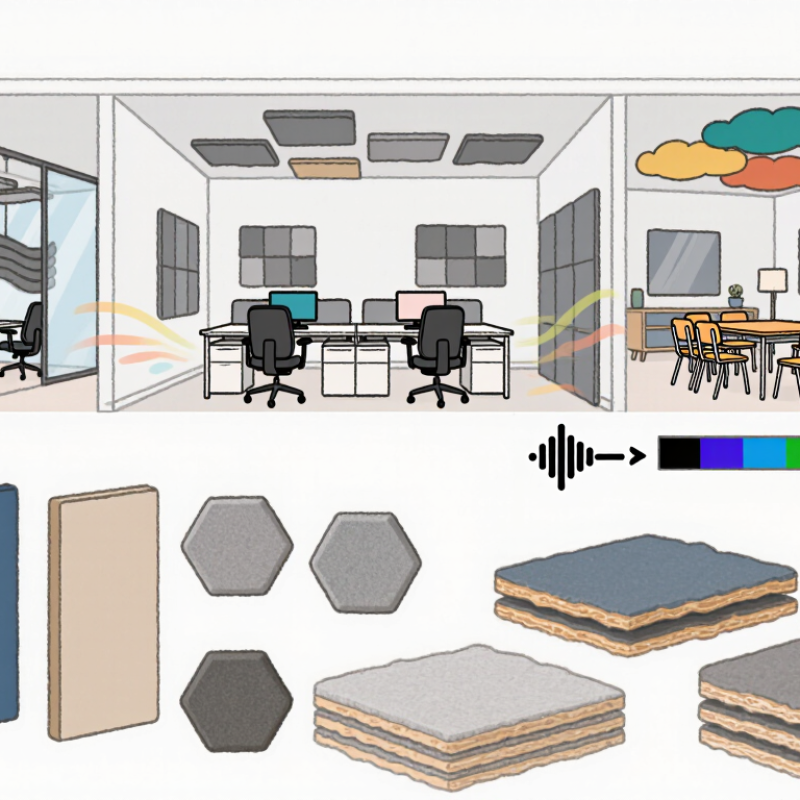
Choosing the right acoustic panel in 2026 requires comparing panel types, core materials, and tested absorption ratings. Fabric-wrapped fiberglass or mineral wool panels usually provide strong broadband absorption, especially in offices, studios, and meeting rooms. Their performance improves with greater thickness and a small air gap behind the panel.

Polyester fiber panels are lightweight, durable, and easier to handle, but their low-frequency absorption may be limited. Wood-slat panels can improve speech clarity while adding visual warmth; however, their slat spacing and backing material affect performance. Foam panels absorb some reflections, yet they may perform poorly against deeper bass. I once selected panels by appearance alone. That shortcut failed.

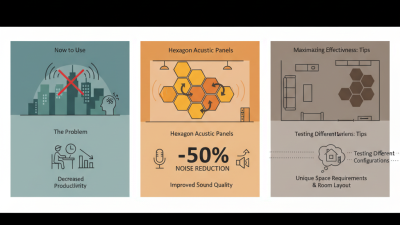
Tips: Check the published NRC or αw rating, but do not treat one number as complete evidence. NRC averages absorption across selected midrange frequencies, while αw uses a different testing method. Ask for test data and frequency-band results. For voices, target reflective walls near speakers and listeners. For music, consider thicker panels, corner bass traps, and ceiling treatment. Place a small mirror against the wall; treat the spots where you can see the speakers. Leave some hard surfaces untreated, because a room can become unnaturally dull. Measurements with a calibrated microphone are more reliable than guessing, though even basic before-and-after recordings can reveal useful changes.

Match Panel Placement to Room Shape, Surfaces, and Listening Areas

How to Choose the Right Acoustic Panel in 2026?

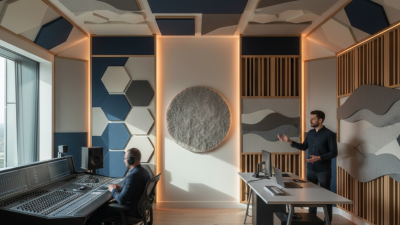
Match panel placement to room shape, surfaces, and listening areas. A flat wall does not need equal treatment everywhere. In a rectangular room, place absorption at the first-reflection points beside the listening position. Use a mirror to find them. If the speaker appears in the mirror, that wall section needs attention. Ceiling panels can reduce strong vertical reflections above desks or mixing seats. They also help when hard floors create a sharp, tiring sound.

Room shape changes the strategy. In an L-shaped space, sound may collect around the corner rather than directly behind the listener. A few thicker panels there can work better than covering the entire room. The U.S. General Services Administration identifies reverberation as a major factor in speech privacy and workplace comfort. ISO 3382-2 provides methods for measuring reverberation time, so placement should follow measurements, not guesswork. I have seen rooms become too dry after excessive wall coverage. That mistake is common.

Treat reflective surfaces first, including glass, plaster, stone, and bare ceilings. Aim panels toward the active listening area, not simply toward empty walls. The World Health Organization’s 2018 environmental noise guidelines recommend bedrooms remain below 30 dB(A) at night, but absorption cannot block outside noise. It mainly controls reflections inside the room. Check the result from several seats. One listening position may sound balanced, while another still feels harsh. Reconsider the layout.

Evaluate Safety, Sustainability, Appearance, and Installation Requirements

How to Choose the Right Acoustic Panel in 2026?

Evaluate Safety, Sustainability, Appearance, and Installation Requirements

Choosing acoustic panels in 2026 requires more than comparing absorption ratings. I inspect safety data before color samples. Check fire performance, indoor-air emissions, edge stability, and mounting hardware. Ask for current test reports, not vague marketing claims. Panels should suit the room’s use, occupancy, and ventilation. In a classroom, wipeable surfaces and secure fixing matter. In a recording room, absorption balance matters more than maximum softness. Small details matter. Avoid products with a strong chemical smell. That warning is not proof, but it deserves investigation.

Sustainability needs evidence. Look for recycled content, responsible fiber sources, product durability, and repair options. A panel lasting ten years may outperform a cheaper panel replaced repeatedly. Request environmental declarations when available. Ask how the panel can be separated at disposal. Be careful with impressive percentages. They may describe packaging, not the panel itself. I have seen attractive materials age poorly near windows. Sunlight, dust, and cleaning routines can change appearance faster than expected. Test a sample in the actual room.

Appearance should support the space, not hide acoustic problems. Use samples beside flooring, lighting, and furniture. Check color at morning and evening. Installation also affects performance. Measure wall conditions, service access, panel spacing, and ceiling height before ordering. Heavy panels may need stronger anchors. Uneven walls can leave visible gaps. A qualified installer should follow the tested fixing method and document changes. I still allow extra time for alignment. “Simple installation” is often optimistic. Reconsider the choice if maintenance access disappears after installation.

Check Performance, Budget, and Long-Term Maintenance Before Buying

How to Choose the Right Acoustic Panel in 2026?

Start with the room. A panel can reduce reverberation, but it cannot block traffic noise through a weak window. The World Health Organization’s 2018 Environmental Noise Guidelines recommend indoor levels below 35 dB(A) for classrooms and below 30 dB(A) for bedrooms at night. These targets show why appearance alone is a poor buying guide. Measure room size, occupancy, noise sources, and reverberation time before selecting materials. It is not enough.

Check independent laboratory results tested under ISO 354 or ASTM C423. These standards measure sound absorption in controlled conditions, while the Noise Reduction Coefficient offers a practical comparison. Ask whether the quoted rating applies to the installed panel, including its air gap. A six-centimetre gap can perform differently from a panel fixed directly to a wall. That detail is easy to miss.

Budget for installation, cleaning, replacement, and future room changes. The initial price often hides access equipment, custom cutting, and fire-performance documentation. Choose surfaces that tolerate vacuuming or gentle wiping, especially near desks and ventilation outlets. Maintenance instructions should state acceptable cleaning methods and expected colour stability. I have seen attractive panels lose their value after one careless cleaning cycle. The better decision may be less decorative. Review the warranty, test reports, and supplier documentation yearly, because room use changes faster than most acoustic plans.