China Top Acoustic Panel Manufacturers and Suppliers
Choosing an Acoustic Panel manufacturer in China involves more than comparing prices or attractive product photos. Buyers need to understand how panels perform in the rooms where they will be installed. A meeting room, recording studio, restaurant, and classroom each present different sound-control needs. Panel thickness, core material, surface finish, and mounting method can all affect the result. Small details matter.
This guide introduces China-based manufacturers and suppliers of acoustic panels, with practical points for evaluating their products and capabilities. Look for clear specifications, sample availability, stated test methods, and consistent communication. Ask how custom dimensions, colors, edge details, and packaging are handled. Where relevant, request current documentation for acoustic performance and material safety, then confirm that it matches your project and destination requirements. A polished catalogue is useful, but it cannot replace evidence.
There are trade-offs. A lower quoted price may exclude installation hardware, protective packing, or custom testing. A supplier with a broad product range may not specialize in your application. No single factory is right for every project. That is easy to overlook. Factory experience, production capacity, quality checks, lead times, and after-sales support deserve careful review, especially for larger orders. This overview is a starting point, not an endorsement. Verify claims directly, compare samples under real lighting, and consider consulting an acoustics professional before making a final selection. The right panel is the one that fits both the room and the project’s documented requirements.
What Acoustic Panels Are and Why They Matter in China
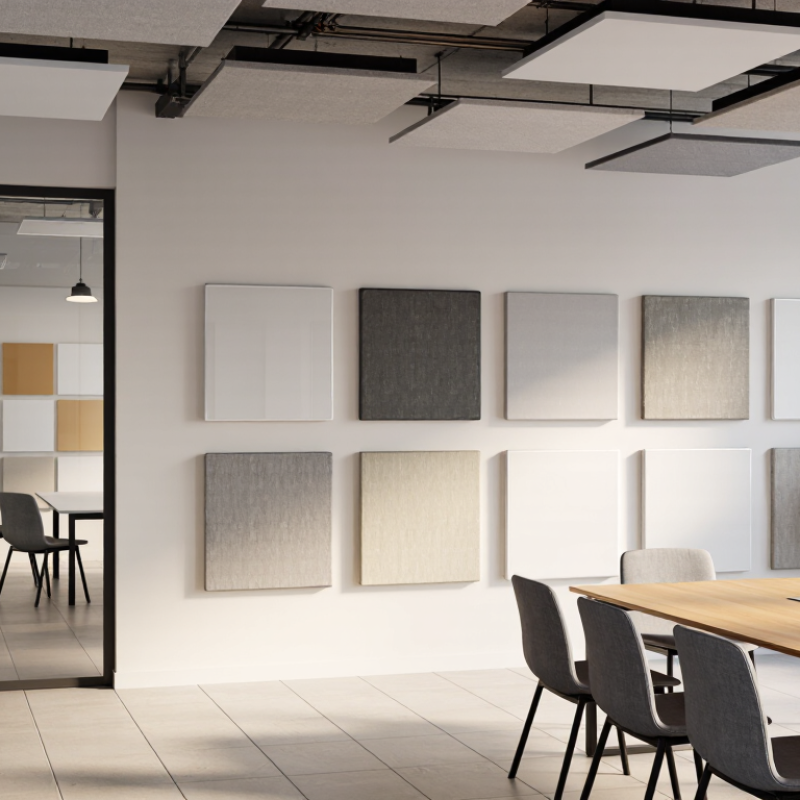
Acoustic panels are porous or perforated finishes designed to absorb sound reflections inside a room. They are commonly installed on walls or ceilings, where speech, footsteps, and equipment noise can otherwise bounce between hard surfaces. They do not automatically soundproof a room. That distinction matters. A panel may reduce echo, while traffic noise still enters through windows or gaps.
In China, dense urban living, busy roads, and compact offices make indoor sound control a practical design issue. The World Health Organization’s 2018 Environmental Noise Guidelines recommend keeping road-traffic exposure below 53 dB Lden, a day-evening-night average associated with adverse health effects. This is an outdoor exposure guideline, not a panel performance rating. Still, it shows why designers should assess noise at its source and inside the room. For panel selection, look for tested sound-absorption results, such as measurements under ISO 354, and check the intended frequency range. A meeting room with sharp speech reflections needs a different treatment from a plant room with low-frequency machinery. Details matter. Sometimes specifications look precise, yet installation gaps or an overly small treated area weaken the result. That is easy to overlook.
China’s Acoustic Panel Industry: Common Test Frequencies
Acoustic panels are materials designed to absorb sound and reduce reflections indoors. These standard octave-band center frequencies are commonly used to describe acoustic performance; the chart does not show absorption ratings, which vary by product and require testing.
China’s Main Acoustic Panel Types and Manufacturing Materials
China’s acoustic-panel range includes polyester-fiber boards, fabric-wrapped mineral or glass wool, perforated wood panels, and foam products. Each type suits different rooms and installation needs. Polyester felt is lightweight and easy to cut for wall layouts. Mineral-wool panels often use a porous core beneath fabric, while perforated wood combines a hard surface with an absorptive backing. Panels absorb sound. They do not automatically block it.
Materials affect both performance and upkeep. In a busy meeting room, fabric-wrapped panels can reduce reflections, but exposed edges may collect dust or suffer wear. PET felt is often chosen for its neat, firm finish. Wood panels bring a warmer visual texture; their slot spacing and backing influence how they perform. Foam is light and simple to shape, though its surface may not suit every public interior. Small details matter.
When comparing suppliers, ask for test data, core density, panel thickness, fire-performance documentation, and installation guidance. Results depend on the full assembly, not just the facing material. A sample can reveal color and texture, but it cannot prove room performance. That distinction is easy to overlook. Acoustic needs also vary with ceiling height, furnishings, and background noise, so a product specification alone may not predict the result.
How to Evaluate Chinese Acoustic Panel Manufacturers and Suppliers
Evaluating Chinese acoustic-panel manufacturers starts with test evidence, not polished catalog claims. Ask for absorption results measured under ISO 354 or ASTM C423, with sample thickness, mounting method, and frequency bands identified. Those details matter. An NRC value alone can conceal weak low-frequency performance. Confirm the report matches the offered core, facing, density, and production site. Request batch records, incoming-material checks, and a clear process for addressing defects. Compare a production sample with the approved laboratory sample; they may not be identical.
Use project conditions to test supplier claims. The WHO’s 2018 Environmental Noise Guidelines recommend road-traffic exposure below 53 dB Lden and 45 dB Lnight. These are health-based outdoor targets, not proof that a panel will meet a room’s acoustic design goals. Ask for assembly-level results, especially where ceilings, air gaps, or wall cavities affect performance. Check fire-performance documentation against the project specification and destination-market requirements. Also review lead times, protective packaging, and response speed through a small pilot order. Not glamorous, but revealing. One caveat: laboratory ratings cannot predict every installation, and workmanship still matters.
Ordering, Customization, and Export Considerations in China
China Top Acoustic Panel Manufacturers and Suppliers
Ordering acoustic panels from China requires more than comparing unit prices. Start with a clear specification sheet covering dimensions, thickness, core material, fabric type, edge details, and required acoustic performance. Ask suppliers for test reports, production photos, and recent project references. Request a physical sample before approving mass production. Small color differences can become obvious across a large wall.
Customization should be confirmed in writing. Provide drawings, surface patterns, fire-performance requirements, packing preferences, and acceptable tolerances. Discuss minimum order quantities and tooling charges early. A factory may offer CNC cutting, printing, or wrapped edges, but not every facility controls these processes internally. That distinction affects lead time and quality. Keep one approved sample for comparison.
Export planning needs equal attention. Confirm the HS code, commercial invoice, packing list, carton markings, and destination-country requirements with your customs broker. Use moisture-resistant packaging when containers may face temperature changes. Clarify Incoterms, loading photos, inspection timing, and responsibility for damaged goods. A pre-shipment inspection can catch wrong colors, crushed corners, or missing accessories. Low prices can be misleading. Even careful sourcing has gaps, so leave time for one correction cycle.