Global buyers are examining the Bamboo Wall Panel as a practical choice for modern interiors. Its warm grain, light weight, and renewable growth cycle attract hospitality, retail, and residential projects. Yet responsible sourcing requires more than an attractive surface.
Dr. Walter Liese, a respected bamboo researcher, described the material simply: “Bamboo is a grass, not a tree.” That distinction matters. Bamboo can mature quickly, but responsible production still depends on species selection, harvest timing, treatment, and replanting practices. A reliable supplier should explain each stage clearly. Ask for botanical details, country of origin, manufacturing records, and third-party certifications where available.
A well-made Bamboo Wall Panel should feel stable, not merely decorative. Inspect the edge bonding, surface coating, backing structure, and panel thickness. In a humid showroom, poor treatment may reveal itself through swelling, odor, or uneven joints. Small details speak loudly.
Compliance also deserves attention. Buyers should request test reports for formaldehyde emissions, fire performance, moisture resistance, and structural suitability. Requirements differ between markets. Do not assume one certificate covers every destination.
Global sourcing can reduce costs and expand design options, but cheaper is not always better. Long shipping routes add emissions, delays, and packaging risks. I would compare landed cost, lead time, minimum order quantity, and after-sales support together. That approach is less glamorous, yet more realistic.
Bamboo is not automatically sustainable. Supplier transparency makes the difference. With careful verification, a Bamboo Wall Panel can combine natural character, dependable performance, and responsible commercial value. There may still be compromises. Honest sourcing acknowledges them.
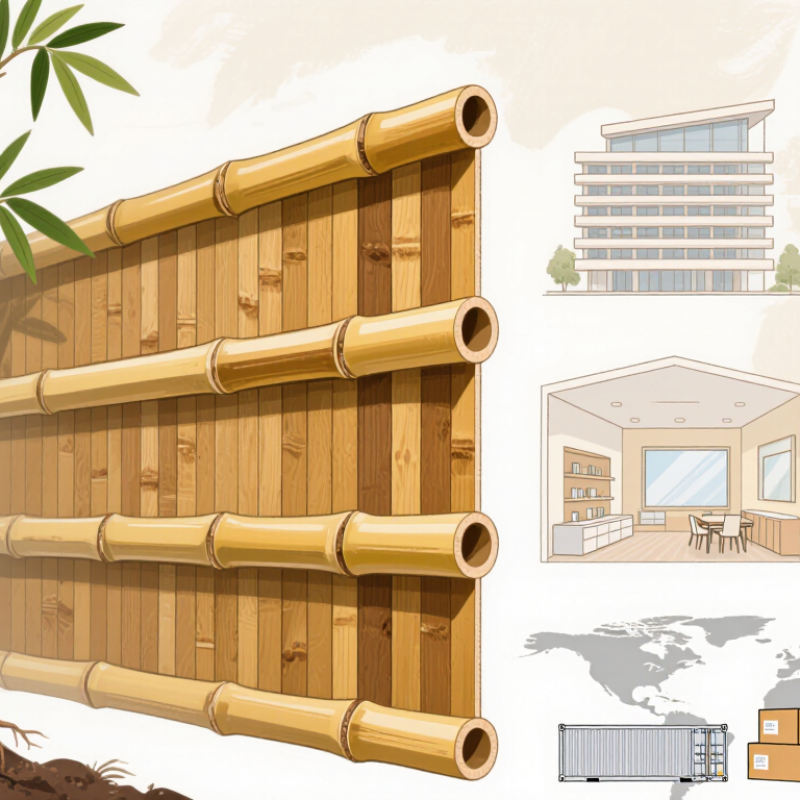
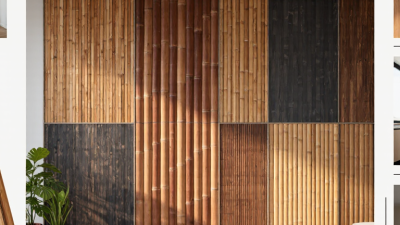
Bamboo wall panels are engineered interior or exterior boards made from laminated, woven, strand-woven, or composite bamboo. Unlike raw bamboo screens, they usually contain bonded strips, a backing layer, and a protective finish. Their surfaces can resemble timber, stone, or woven fabric.
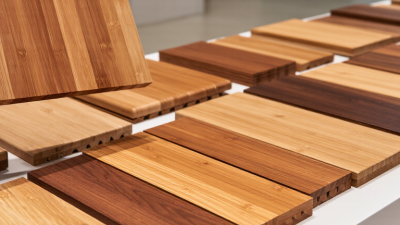
The main types serve different installation needs. Horizontal laminated panels show long, calm grain lines.
Strand-woven panels are denser and more impact-resistant. Woven panels add texture but may need a rigid backing.
Composite panels can improve dimensional stability, although adhesive quality becomes critical.
The FAO Global Forest Resources Assessment 2020 estimates global bamboo forests cover about 35 million hectares. That resource base supports wider sourcing, but availability does not guarantee consistent panel quality.
Core features include low weight, fast installation, renewable material content, and strong visual warmth.
In practical inspections, check panel thickness, moisture content, formaldehyde emissions, surface hardness, and batch color variation.
Ask suppliers for test reports, fire classifications, and chain-of-custody evidence. ASTM and EN methods can help compare results across countries. Details matter.
Bamboo also has limits. Poorly dried panels may swell around bathroom joints or coastal walls. Dark finishes can reveal sanding marks.
Some buyers assume every bamboo product is automatically sustainable; that assumption needs correction. Adhesives, transport distance, coatings, and factory energy affect the final footprint.
INBAR reports describe bamboo as a fast-growing resource, yet growth speed alone is not a complete environmental assessment. Global sourcing works best when design, testing, packaging, and installation conditions are reviewed together.
Bamboo wall panels begin with mature culms, usually harvested after three to five years. Suppliers remove outer layers, split the culms, and dry the strips in controlled kilns. The strips are then laminated under heat and pressure. Finally, factories sand, coat, and inspect each panel. Moisture content, bonding strength, formaldehyde emissions, and dimensional stability require documented testing.
INBAR reports more than 1,600 bamboo species and approximately 35 million hectares of bamboo resources worldwide. Its industry studies also identify Asia as the dominant production region, although cultivation and processing are expanding elsewhere. The FAO recognizes bamboo as an important non-wood forest product. However, global sourcing is not automatically sustainable. Harvest age, transport distance, adhesive chemistry, and factory energy use can change the environmental result. The process is not flawless. That assumption can fail.
Tips: Request batch-level traceability, moisture-test records, and third-party emission results. Check whether panels meet applicable standards, such as EN 717-1 or local indoor-air requirements. Ask for samples from different production lots. Color and texture can vary. A supplier’s polished sample may hide production inconsistency. Confirm packaging strength, container loading plans, and replacement procedures before ordering. Reliable sourcing depends on evidence, not attractive claims.
Bamboo wall panels can support lower-impact interior projects when sourcing is carefully controlled. Bamboo grows quickly and can regenerate from established root systems. That growth pattern may reduce pressure on slower-growing timber resources. However, environmental value depends on farming methods, transport distance, and factory energy use.
Performance also matters.
In commercial interiors, well-made panels can provide a warm surface, stable dimensions, and useful acoustic improvement. Their layered structure may resist everyday impacts better than thin decorative sheets. During procurement, request moisture resistance data, fire-test reports, and indoor air quality documentation. Adhesive emissions deserve attention, especially in bedrooms, schools, and offices. Specifications should match local building requirements, not just supplier descriptions.
The material is not flawless. Poor sealing can lead to swelling near sinks, bathrooms, or humid coastal areas. Natural color variation may also make large installations look less uniform. I have found that sample approval prevents costly surprises. A small sample should be checked under actual lighting and against the planned substrate. Responsible global sourcing also includes traceable raw materials, consistent quality control, safe packaging, and clear installation guidance. Third-party certifications can strengthen confidence, but buyers should verify their scope and validity. A low price can hide replacement costs later. That is an uncomfortable point, but it deserves honest consideration.
Global bamboo sourcing requires more than attractive grain and competitive pricing. Buyers should verify bamboo species, maturity, strip density, and production consistency. Panel moisture content deserves close attention. Excess moisture can cause swelling, mold, or joint movement after installation. Ask for recent laboratory reports, not only supplier statements.
Adhesive safety is equally important. Request formaldehyde emission results and VOC test data for the destination market. Common references include EN, ASTM, or ISO methods, but requirements differ by country. Fire performance, bending strength, surface hardness, and dimensional tolerance should match the project specification. A clear technical sheet should show test methods, sample conditions, and report dates.
Inspect a representative batch before shipment. Check panel thickness with a calibrated gauge, examine edges for gaps, and compare color variation under natural light. Packaging should protect corners from rain and impact. Traceable batch numbers also help resolve quality disputes. Supply-chain documentation may include legal harvesting records and recognized forest-management certifications, when required.
Small details matter. A low price can hide weak adhesive control or unstable drying. Yet strict standards do not guarantee perfect panels. Natural bamboo still varies, and buyers should allow reasonable color differences. One practical mistake is approving samples without testing full production. Independent inspection adds cost, but it can reveal problems before containers leave the port.
Bamboo wall panels can look affordable until supplier evaluation begins. Ask for factory photos, production capacity, moisture-control records, and recent test reports. A serious supplier should explain bamboo species, adhesive class, panel density, surface treatment, and allowable size tolerance. Request samples from different production batches, not one polished piece. INBAR’s Global Assessment of Bamboo Resources reports bamboo across more than 1,600 species, so “bamboo panel” is not a sufficient specification.
Build the landed cost line by line. Include panel price, packaging, inspection, inland transport, insurance, duties, and destination delivery. Compare costs per usable square metre, because trimming and damaged edges reduce the real yield. My first sourcing sheet ignored crate volume. That mistake made the unit price look attractive. It was not. Ask suppliers for carton dimensions and loading plans before negotiating volume discounts.
Shipping needs equal attention. UNCTAD’s Review of Maritime Transport states that ships carry over 80% of global merchandise trade, but port delays can still disrupt installation schedules. Confirm the shipping term, port pair, container type, lead time, and documentation responsibilities in writing. The World Bank’s Logistics Performance Index 2023 shows major differences between countries in customs, infrastructure, and shipment reliability. Use that data when selecting routes. Add buffer time for humidity checks, fumigation requirements, and inspections. Bamboo is sensitive to moisture. A low freight quote means little if panels arrive warped, wet, or poorly protected.
| Evaluation Dimension | Practical Data Point | Typical Range or Requirement | Why It Matters for Global Buyers | Recommended Verification |
|---|---|---|---|---|
| Material Composition | Bamboo content and backing | Confirm whether the panel is solid bamboo, laminated bamboo, strand-woven bamboo, or bamboo fiber composite. Record the backing material, such as plywood, MDF, PVC, or mineral board. | Different constructions affect moisture resistance, weight, installation method, emissions, durability, and recycling options. | Request a technical datasheet, cross-section photo, raw-material declaration, and production sample. |
| Panel Dimensions | Common commercial formats | Frequently quoted sizes include approximately 2,400–2,900 mm in length, 600–1,220 mm in width, and 5–20 mm in thickness. Actual sizes vary by construction. | Panel dimensions determine cutting loss, container utilization, installation labor, and compatibility with local building layouts. | Compare the finished size, usable coverage, tongue-and-groove allowance, and dimensional tolerance on the quotation. |
| Surface Finish | Factory-applied coating | Typical options include natural oil, water-based lacquer, UV-cured coating, carbonized color, and prefinished paint. Confirm gloss level and number of coats. | Finish selection influences appearance, scratch resistance, cleaning requirements, odor, and installation readiness. | Approve a control sample and request abrasion, adhesion, stain-resistance, and color-consistency information where relevant. |
| Moisture Performance | Intended-use environment | Interior dry areas are generally lower risk. Kitchens, bathrooms, coastal regions, and other humid spaces require documented moisture performance and correct sealing details. | Bamboo is hygroscopic; uncontrolled humidity can contribute to swelling, shrinkage, cupping, or joint movement. | Ask for moisture-content specifications, acclimatization instructions, edge-sealing requirements, and applicable test reports. |
| Sustainability Evidence | Traceability and certifications | Look for documented bamboo sourcing, legal-harvest evidence, chain-of-custody certification where required, and an environmental product declaration when available. | Evidence-based sustainability claims reduce greenwashing risk and support project, retailer, and regulatory requirements. | Check certificate scope, validity dates, product coverage, and whether the certificate applies to the actual manufacturing site. |
| Quality Management | Production controls | Supplier should define inspection points for moisture, dimensions, bonding, surface defects, color variation, packaging, and final quantity. | Consistent quality is particularly important when repeat orders must match an approved sample across multiple shipments. | Request an inspection plan, defect classification, batch records, retained samples, and pre-shipment inspection rights. |
| Supplier Capacity | Lead time and monthly output | For standard products, production often takes about 20–45 days after approval and deposit; custom finishes or tooling may require additional time. | Capacity and planning discipline affect launch schedules, project milestones, and the risk of partial shipments. | Confirm monthly capacity, current order load, minimum order quantity, sample lead time, and peak-season production schedule. |
| Unit Cost | Factory price basis | Indicative bamboo panel pricing can vary widely, often around USD 15–60 per square meter, depending on construction, thickness, finish, certification, order volume, and destination requirements. | A low unit price may exclude coating upgrades, export packaging, testing, inland transport, or replacement allowances. | Request a line-item quotation with currency, validity period, minimum order quantity, sample charges, tooling, and payment terms. |
| Total Landed Cost | Cost calculation | Calculate: product cost + export packaging + inland freight + origin charges + ocean or air freight + insurance + duties and taxes + destination handling + local delivery. | Landed cost provides a more reliable comparison than factory price alone and helps prevent budget overruns. | Obtain comparable quotations under the same Incoterm, shipment volume, destination port, currency, and delivery assumptions. |
| Packaging Design | Export protection | Use moisture barriers, corner protection, rigid pallets or crates, edge protection, and load restraint. Packaging should be suitable for long-distance multimodal transport. | Panels can be damaged by impact, abrasion, pressure, and humidity during handling and transit. | Approve packaging drawings, carton or pallet specifications, package-drop criteria, maximum stack height, and photo records before loading. |
| Container Planning | Volume and weight utilization | Calculate packed cubic volume and gross weight before booking. Flat panels may be volume-limited even when the container's maximum weight is not reached. | Accurate loading plans reduce unused space, shipment splitting, product compression, and unexpected freight surcharges. | Request a packing list showing pieces per package, packages per pallet, dimensions, net weight, gross weight, and total cubic meters. |
| Shipping Mode | Transit-time trade-off | Ocean freight is generally the economical option for commercial volumes. Air freight is faster but usually unsuitable for heavy or high-volume panel orders. | The appropriate mode balances project urgency, inventory cost, freight cost, and the risk of damage from extra handling. | Compare door-to-door transit time, port-to-port transit time, booking frequency, handling points, and emergency replacement options. |
| Incoterms | Responsibility and risk transfer | Common quotations may use EXW, FOB, CIF, or DAP. Each term allocates different responsibilities for freight, insurance, customs, delivery, and risk. | Two prices cannot be compared fairly unless they use the same delivery point and responsibility structure. | Ensure the quotation names the exact place, such as a named port or warehouse, and confirms who handles export and import clearance. |
| Customs Documentation | Import-readiness | Typical documents may include commercial invoice, packing list, bill of lading, certificate of origin, treatment declaration, and test or certification documents when required. | Incomplete or inconsistent documents can delay clearance, increase storage charges, or trigger inspection. | Confirm HS classification with a qualified customs broker and check destination-country rules before placing the order. |
| Wood Packaging Compliance | International transport requirements | Solid-wood pallets and crates used in international trade may need to comply with ISPM 15 treatment and marking requirements. | Non-compliant wood packaging can be refused, re-exported, treated, or destroyed by the importing authority. | Request clear photos of compliant marks and confirm whether pallets are solid wood, plywood, or another material. |
| Pre-Shipment Inspection | Release criteria | Inspect quantity, dimensions, finish, color, moisture condition, labels, packaging integrity, and documentation before shipment release. | Resolving defects at the origin is generally faster and less expensive than returning or replacing panels after import. | Use an approved sample, written acceptance limits, inspection photographs, and a defined process for corrective action. |
| Payment Protection | Commercial risk controls | Use milestone-based payments where appropriate: sample approval, production start, inspection approval, and balance before document release. | Payment structure should limit exposure while remaining commercially acceptable to the supplier. | Document specifications, remedies for non-conformity, warranty terms, replacement policy, and dispute-resolution jurisdiction in the contract. |
| Installation and Warranty | After-sales requirements | Confirm substrate preparation, adhesive or fastener compatibility, acclimatization period, expansion gaps, cleaning method, and warranty exclusions. | Correct installation and maintenance are essential to protect appearance and reduce claims related to humidity or movement. | Request an installation guide, maintenance sheet, spare-panel recommendation, and written warranty period and coverage. |
| Supplier Selection Score | Weighted decision model | Example weighting: quality and compliance 30%, total landed cost 25%, capacity and lead time 20%, shipping capability 15%, communication and service 10%. | A weighted score prevents the lowest factory price from dominating a decision that also depends on reliability and delivery performance. | Score at least three qualified suppliers using identical questions, evidence requirements, and commercial assumptions. |